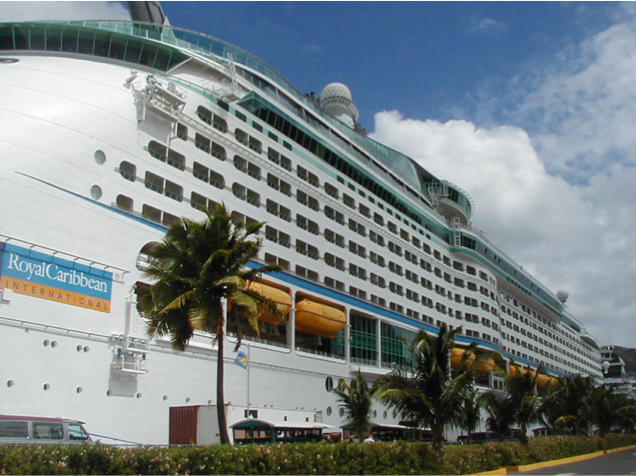
 In 2011, Pasquale Vaglio, 82, a retired New York City policeman was enjoying the trip of his lifetime with 11 of his family members when the unthinkable happened. As he was departing Royal Caribbean’s Explorer of the Seas in Bermuda, he tripped and hit his head. Vaglio was immediately sent to the ship’s medical facility where he was assessed by an onboard nurse and sent back to his cabin to rest. Following this command, Vaglio later went into a coma and got airlifted to a United States hospital where he later passed away.
During the grieving process, there was one question that could not leave Vaglio’s daughter, Patricia Franza’s mind: Was there more that the onboard nurse could have done? For someone suffering from a brain injury, Franza and the rest of her family thought that the nurse could have done more than to just tell Vaglio to rest. Could this have prevented his death? These questions led Franza to take Royal Caribbean International to court for medical malpractice. Unfortunately, the laws that were in place at the time of the trial did not support Franza’s attempt, but Franza and her family were determined to get these laws changed, and they were successful.
At the time of the incident, the current state of the law followed what was called the Barbetta Rule. This rule was a result of the 1988 Barbetta vs. S/S Bermuda Star trial, which stated that ship owners could be liable for negligence on the part of the ship’s doctor only when seamen bring the claim, not passengers. When it came to cruise lines, the Barbetta Rule meant that maritime law provided immunity to the ships and their employees in cases that were brought to trial by a passenger. This was because doctors and nurses that worked on the ships were technically medical contractors, not professionals employed by the cruise line itself. Ultimately, this meant that all medical malpractice lawsuits against cruise lines for contract doctors or nurses on cruise ships would be thrown out.
However, on November 10, 2014, Franza was able to change the ruling in favor of Vaglio. A three-judge panel on the 11th Circuit Court of Appeals ruled in Franza’s favor, stating that the laws established by Barbetta in 1988 were now out of date. The 11th Circuit stated that with new technology and major cruise ship changes since 1988, there was no reason that these doctors and nurses should not be liable for their actions when treating passengers.
When the Barbetta Rule was established, cruise ship vacations were a lot less common, and the technology on the actual ships was not advanced. The doctors and nurses employed on the ships were there only for precautionary measure. Just as a school nurse plays more of a communication role (contacting parents of sick children, calling 911 if it is an emergency), a cruise ship doctor or nurse had a very similar role. They were not there to diagnose passengers, but more to provide a safe-zone for contact. Based on the growth in popularity of cruise vacations, this is no longer an acceptable standard. Some cruise lines provide technology such as ship-wide Wi-Fi, robotic bartenders, indoor skydiving, and personalized television programs. With the ability to provide these technological advancements, there is no longer an excuse to not provide medical advancements as well. With each new ship costing over one billion dollars to make, the money is present to employ experienced doctors with proper medical equipment. With the nature of cruising, sick or injured passengers often have no other alternative for treatment than going to the medical center, so they should feel safe when approaching a ship doctor. With the Barebtta Rule, many passengers saw no value in going to the ship’s medical center. Although cruise ships technically fall under maritime law jurisdiction, the Franza ruling changed the liability laws.
A few months following the November 10th ruling, Royal Caribbean International requested a rehearing, arguing that there is no reason to change maritime law, which has been relatively unchanging for centuries. Royal Caribbean International lawyers stated, “Royal Caribbean is not in the business of providing healthcare. It is in the business of providing vacations.” Despite these arguments, the court denied Royal Caribbean International’s request for a rehearing, establishing the ruling of the Franza case as new law.
With the Barbetta Rule no longer in place, there are a few changes that the cruise line industry as well as the average 2.1 million passengers a year may notice. The most important change, is that now it is no longer impossible to file successful medical malpractice lawsuits against cruise ship lines for the malpractice of contract doctors or nurses; past victims may now attempt to file a lawsuit, as long as it falls within the statute of limitations. This could still mean big losses for cruise lines, such as Carnival and Royal Caribbean International.
With cruise lines now being potentially liable for the medical care they provide to passengers, they will probably begin to hire more experienced and accountable medical physicians and nurses, resulting in safer cruises for passengers
The change in the rule may create other issues. For example, when a ship docks in a port, the passengers depart the ship and can participate in a number of activities from sun bathing to zip lining to scuba diving. While some of these excursions are provided by outside vendors, a lot of them are sponsored by the cruise line itself. With the elimination of the Barbetta Rule, the question arises as to whether the cruise lines will be liable for any accidents that occur during their sponsored offshore excursions. While the Franza case only covered the topic of maritime medical malpractice, it may lead to accountability changes for other aspects of a cruise vacation.
For any other questions about the Barbetta Rule, the Franza ruling, cruise laws, or any other aspect of maritime law, contact the Law Office of Matt & Allen today.