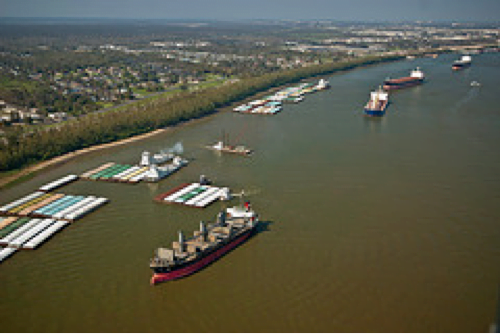
 If you are an offshore worker who’s been injured on the job, you may have a right to compensation for your injuries. Offshore employee injury cases are extremely complex for many reasons. Evidence is quickly lost at sea, and even the question of which law applies to the case requires interpretation of a complex of federal and state law.
Many offshore workers call Lafayette Parish, Louisiana home due to its close proximity to the Gulf of Mexico. About 45 minutes from the water, Lafayette Parish sits a two-hour drive west of New Orleans and an hour and fifteen minutes south of Alexandria. Lafayette Parish is planted in the middle of numerous state parks, wildlife refuge areas, conservation areas, and national forests like the West Bay Wildlife Management Area, White Lake Wetlands Conservation Area, and Kisatchie National Forest.
If you or someone you love has been injured while working offshore, seek the counsel of a knowledgeable offshore accident attorney as soon as possible. The law surrounding maritime accidents is complex and requires knowledge of very many areas of state and federal law.
The first legal question a Lafayette Parish offshore accident attorney will answer is which laws will apply to the accident and the workers’ compensation. How a maritime worker’s injury will be treated in the courts depends on whether an employee is classified, “seaman” or otherwise.
Recovery by Maritime Workers who Are Not Seamen
An injured worker classified as a “seaman” will be covered by a federal statute called “The Jones Act.” Other maritime workers who are not classified as seamen are covered by the Longshore and Harbor Workers’ Compensation Act (“the Longshore Act”).
Who is a seaman?
Determining who is a “seaman” requires interpretation under a very complex set of cases. In general, a seaman is an employee who is sea-based and a “master or member of a vessel’s crew.” A seaman must contribute to the ship’s work, although he or she need not assist with the vessel’s navigation or transportation. (See 34 J. Mar. L. & Com. 547 at 571.)
The Longshore Act
The federal Longshore Act covers maritime workers who are not seamen and consequently not covered by the Jones Act. The Longshore Act is very similar to the state workers’ compensation statutes. Harbor workers, employees working on docks and in shipyards and shipping terminals, and longshoremen are typically covered by the Longshore Act.
Although the Longshore Act is akin to a state workers’ compensation statute, it tends to provide more compensation for like injuries than most state statutes. Some state statutes replace only 60% of an injured maritime worker’s wages, whereas the Longshore Act provides disability benefits equal to 66 2/3% of the injured worker’s wages. And the Longshore Act provides for permanent partial disability payments, which most state statutes do not.
Recovery by Workers who Are Seamen
A worker classified as a seaman is covered by the Jones Act instead of the Longshore Act. The Jones Act provides three different types of compensation for a seaman’s injuries. All three types of recovery may be available in a single case.
Maintenance and Cure
The first type of recovery for an injured seaman is called maintenance and cure. Maintenance and cure is available even if an employer is not at fault for the injury. It provides payments for care of an injured seaman.
Many of a seaman’s expenses, including food and housing, are covered during a recovery period. Housing expenses covered by maintenance may include utility expenses, property insurance, rent or mortgage payments, and property taxes. Only necessities are covered by maintenance. As a result, the expense of internet access and phone service are not included. In addition to maintenance payments, “cure” compensates an injured seaman for medical expenses resulting from his or her injuries.
Maintenance and cure compensates a seaman for illnesses and injuries that occur while the seaman is serving on a vessel, even if the injury or illness is unrelated to his or her employment. Maintenance and cure payments stop after a seaman has reached “maximum medical improvement,” when doctors don’t expect him or her to further improve.
Negligence
Unlike state workers’ compensation statutes, the federal Jones Act provides a procedure for a seaman to sue his or her employer for negligence. A maritime employer must use ordinary care to keep and maintain the vessel where the seaman is working in a reasonably safe condition. Even minor unsafe conditions can result in employer liability for negligence under the Jones Act, because unlike onshore negligence cases in many states, where a person must be a significant cause of a plaintiff’s injury, a maritime employer can be held liable for an employee seaman’s injuries if the employer was even 1% responsible for the injuries.
Unseaworthiness
A vessel is unseaworthy if its crew, equipment, or hull is not reasonably adequate in character, maintenance, or design to perform its intended functions. A vessel that is unseaworthy may be fully capable of sailing. The doctrine of unseaworthiness is intended to protect seaman regardless of whether a vessel owner acted reasonably under the circumstances. A vessel owner may be held responsible for operating an unseaworthy vessel. The duty to maintain a vessel as seaworthy is absolute and non-delegable; if a vessel is unseaworthy, the ship-owner has few legal excuses for his or her failure.
Have you been injured in a maritime accident?
Maritime employee accidents can take many forms, including:
- Vessel collisions;
- Commercial fishing accidents;
- Shipyard accidents;
- Oil tanker accidents;
- Offshore oil rig accidents;
- Cruise ship accidents;
- Ship groundings;
- Barge accidents;
- Man overboard; and
- Vessel capsize accidents;
If you or someone you love has been injured in a maritime accident, whether you’re classified as a seaman or not, you may have a right to compensation for your injuries. Speak with one of our experienced Lafayette Parish offshore injury employees to find out about your rights. There are time limits that may affect your right to recover, so time is of the essence.